

Do you love the look of single, or even multiple, ear piercings, especially the ones set high on the upper ear? They give off a completely different vibe than lower lobe piercings, and they keep gaining popularity. If that sounds like you, you probably need a helix piercing.
Before booking, the one thing most people want to know is the helix piercing healing time and how to keep it smooth. The good news: with proper aftercare it is very manageable, and this guide walks you through the procedure, the pain, the cost, the jewelry, and the signs of infection to watch for.
Table of Contents
- What Is a Helix Piercing?
- How Does a Helix Piercing Work?
- How Much Does a Helix Piercing Hurt?
- How Much Does a Helix Piercing Cost?
- How to Prepare for a Helix Piercing
- Helix Piercing Aftercare Tips
- Helix Piercing Healing Time
- Helix Piercing Infection Types
- Helix Piercing Risks
- What Jewelry to Use for Your Helix Piercing
- Conclusion
When you want a new piercing but you are not sure you are ready for something more involved, like a nose, lip, or navel piercing, the helix piercing is a great choice.
It can give you an extra touch of originality without drawing too much attention. It is more subtle for anyone who works in a profession where you cannot really show off piercings or tattoos.
What Is a Helix Piercing?
A helix piercing is a piercing through the upper outer cartilage of the ear. You can have a single helix piercing, but there is also the "double helix" and even the "triple helix".
There is also the anti-helix piercing, placed where the front cartilage region is pierced, which differs from the "classic" helix piercing that is normally done in the upper back area of the ear cartilage.
How Does a Helix Piercing Work?
Here is how a helix piercing usually goes at the studio:
- Your piercer will ask you about the placement you want. You can have your helix piercing at the very top of your ear or a little lower down. There is plenty of cartilage in the upper ear, so you have lots of options. When piercing ears, most piercers prefer to leave a mark on your skin so you can be sure of the positioning before anything permanent happens. Once the mark is made and you have signed off, it is time!

- Once you have decided where you want your piercing, your piercer will quickly disinfect the surface of the skin they will work on.
- Then they will use a thin hollow needle to make the hole. As soon as the needle is pulled through, the jewelry is placed immediately.
Once the procedure is done, you will get aftercare instructions to follow. These will help your piercing heal as fast as possible.
How Much Does a Helix Piercing Hurt?
If you are the type to flinch at the idea of a little pain, you are in luck.
Helix piercings are not particularly painful thanks to all the cartilage in this area of the ear. There are not as many nerve endings as in your usual skin. That is why helix piercings are less painful than lip or navel piercings.
Not panicking over nothing is always a struggle for some people when they are about to get pierced. For a lot of folks, the idea of getting pierced is worse than the procedure itself. The best thing to do is to get familiar with what is going to happen. Knowing what to expect can make you feel more at ease. The fear of the unknown is sometimes worse than the actual pain.
How Much Does a Helix Piercing Cost?
Helix piercings will not hurt your bank account. As far as piercings go, they are very affordable.
The price of a helix piercing is around $30 to $75 at most piercing studios. That is usually less than what you will pay for other piercings, such as the industrial piercing, navel, or medusa.
While you will find a fairly wide price range for your helix piercing depending on the piercer you go to, you should not automatically pick the cheapest one. Piercers at the low end of that range may not be as experienced as those at the higher end. That does not mean newer piercers will not do a great job for you, but it is also a good idea to pay a little more for experience, just as you would for a dentist or a specialist doctor.
The piercer's experience is not the only factor that can drive the cost up. If your piercer works in a big city rather than a small rural town, they may also charge you more.

Instead of deciding which piercer to use based on what they will charge for your helix piercing, base your decision on their sanitation knowledge and how comfortable you feel with them. If you feel you are in good hands, it is definitely worth a little more.
How to Prepare for a Helix Piercing
You should pick up some sea salt or a saline solution for cleaning piercings, along with cotton balls.
Make sure you buy saline solution made with sea salt to clean wounds, not table salt!
These simple tools will let you take enough care of your piercing to reduce the risk of infection. That said, they will only work for you if you remember to use them. So make sure you stay on top of your aftercare: it is for your own good.
Helix Piercing Aftercare Tips
Aftercare for healing a helix piercing is so simple that it is hard to get it wrong, unless you decide not to do it at all, which is of course not recommended.
Otherwise, the rules are simple and easy to follow:
- Rule number one is that you should always wash your hands well before touching your helix piercing. You would not want to transfer dirt or bacteria from your hands to your wound. You risk causing an infection, which will complicate the healing of your helix piercing. Unless your hands are clean, remember to keep them away from your helix piercing.
- It is best not to play with your new piercing too much. If you get in the habit of twisting it, you might touch it before remembering that you have not washed your hands. Instead, protect yourself by resisting the urge to fiddle with your helix piercing. If you handle your new piercing too much, you could even slow down its healing.
- Twice a day, you will probably need to touch your new piercing, but you can use cotton pads and cotton swabs instead of your fingers to reduce germs.
- If a crust forms around the helix in the morning or evening, make sure to use a cotton swab dampened with warm water. Work gently to remove the crust with the swab. Once it is gone, you can start cleaning.
How to make a saline solution for healing your helix piercing:
- Soak sea salt for your ear using warm water mixed with a quarter teaspoon of sea salt. Stir it and wait until it cools down enough that you do not wince at the feel of warm liquid on your skin.
- Then, dip the cotton ball in the salty liquid, gently squeeze it out, and hold the cotton ball against your ear.
- This salt water will help clean the area of your helix piercing, and the warm liquid should soothe your fresh wound. Be careful with cotton balls, though: they can shed tiny fibers, especially if you rub them too hard against the piercing. So go gently.
- If you do not want to bother mixing your own sea salt solution, there are many specialized aftercare products on the market for healing helix piercings that help promote fast, effective healing for all types of piercings.
Whichever method you choose, you should apply firm pressure to hold the front and back sides of your helix piercing for about three minutes each time you clean it. This can help reduce bumps and keloids that might be tempted to form there.
- If you are a phone addict and love staying in touch by calling people, you should slow down and switch to texting for a while. Your ear will be sensitive, and holding that phone near your helix piercing can hurt.

It will be hard to resist the appeal of twisting and playing with your new jewelry. Still, on top of the infection risk from putting your dirty hands on your piercing, you can also irritate the area.
- While your piercing is still healing, avoid diving into the public pool. It is a good idea to stay out for the whole healing time of your helix piercing, even if you do not always plan to dunk your head. Water can still splash up and get into your piercing. That could be enough to lead to an infection.
- Hair products are another thing to avoid during the healing phase. Being too eager with hairspray can dry out your piercing or irritate the skin. It is best to cover your ear as much as you can when spraying a hair product near your piercing. You can use your hand to cover the piercing before spraying. Just remember to wash your hands well first.
- You may also want to adjust your sleeping position to help avoid irritating your piercing. If your helix was just pierced on one side, you should try to sleep on the other side to avoid rubbing your fresh piercing on your pillow all night. The less irritation, the better when it comes to healing.
- Finally, be careful when putting on or taking off shirts, especially if the neck hole is tight. They can snag on your new piercing and cause immediate pain and irritation.
Helix Piercing Healing Time
When cartilage is involved, you are looking at a longer recovery time than for a simple skin piercing.
While an earlobe piercing can be healed in about a month, you will need to wait much longer than that for your helix piercing to be healed and fully closed.
The helix piercing healing time is generally around three to six months for the piercing to fully heal.
On the other hand, in some cases, it can take up to a year. That is a long wait, but you can try to speed things up by taking good care of your piercing. The more attention you give your aftercare rules, the less chance something goes wrong.
If you end up with an infection, your healing time will take much longer. That is just one more reason to do everything in your power to prevent infections.
Helix Piercing Infection Types
Most people who get a helix piercing heal well.
Their piercing will heal fine without any complications. However, from time to time, something goes wrong and an infection sets in.

Infections are sometimes limited to the skin right around the piercing area. Although, sometimes, it can start to spread beyond that area and cause problems throughout your body.
When that happens, an infection becomes more than a simple nuisance: it can potentially cause big problems, so you need to take any sign of infection seriously.
Figuring out what is normal after a piercing and what is not is sometimes easier said than done. It can be hard to tell whether redness means an infection is present or whether it is just one of the normal side effects of a helix piercing.
Here are some signs to help you figure out what is happening with your piercing and what you should do about them:
Redness
A helix piercing is going to cause redness, so do not freak out if you look at your piercing and see that your upper ear is completely red. Piercing is a trauma to the skin and, in this case, to the cartilage as well. Redness is a normal response to trauma.
Still, since redness is also a sign of infection, how do you know when redness is normal and when it has a more sinister meaning? The key may be to look at the timing and the consistency of the redness.
Redness in the first few days after a helix piercing is not serious. It is not abnormal at all: most people will have red skin at that point. However, if you notice that your skin starts to lose that redness before it suddenly comes back, that could mean trouble.
Any sudden change in the look of your skin that was not caused by something else could mean an infection is brewing. If you notice a lot more redness compared to the day before, try to remember whether you snagged your piercing on your clothes while getting dressed. Maybe you just tugged on it: you can watch it for a day and see if it goes back to normal.
Swelling
Keeping an eye on the swelling of your piercing can be a handy way to figure out whether something concerning is going on.
You should expect some swelling in the first few days after getting your helix pierced. If things keep getting worse, you may want to have your ear checked by a doctor, especially if the swelling comes with warm skin.
Pus Production
You can expect some discharge from your wound in the first few days, even up to a week or so. However, when that pus keeps oozing from your piercing, you may want to keep an eye on it to make sure there is no infection present.
If you notice that pus production has really increased or that the pus has changed color or smells bad, make an appointment with your doctor so they can determine the best plan of action.
Fever
If you end up with a fever and you think you have one of the other signs of infection, you should see your doctor as soon as possible. If they believe your fever may be the result of an infection, they might prescribe a course of antibiotics.
If your doctor tells you that antibiotics are needed, remember to take every pill they give you. Do not stop taking them just because your infection seems to be easing up or you think it might be gone. If you stop taking them too early, you run the risk of the infection coming back, and you may need an extra antibiotic to stop it this time.
The sooner you deal with it, the better the outcome.
It is much easier to treat a simple localized infection than an infection throughout your body. So remember to stay on top of things before they get too out of control.
Helix Piercing Risks
When your helix is pierced, you can avoid one of the main risks, contamination from improper equipment, by asking a few simple questions before your piercing is done.
Ask your piercer which method they use to pierce the helix:
- A piercing gun
- Or a hollow needle.
If they say they use a piercing gun, do not book an appointment there.
A piercing gun causes more irritation and trauma to the skin and cartilage, while a hollow needle is much gentler on the skin and the surrounding cartilage.
Besides the extra trauma caused by a piercing gun, it is also a far less sterile choice. Piercing guns are notoriously hard to clean. Tiny bits of tissue and bodily fluids can get trapped in the crevices of the device. That makes it hard to fully sterilize the piercing gun, even if the piercer is careful to do so.
What Jewelry to Use for Your Helix Piercing
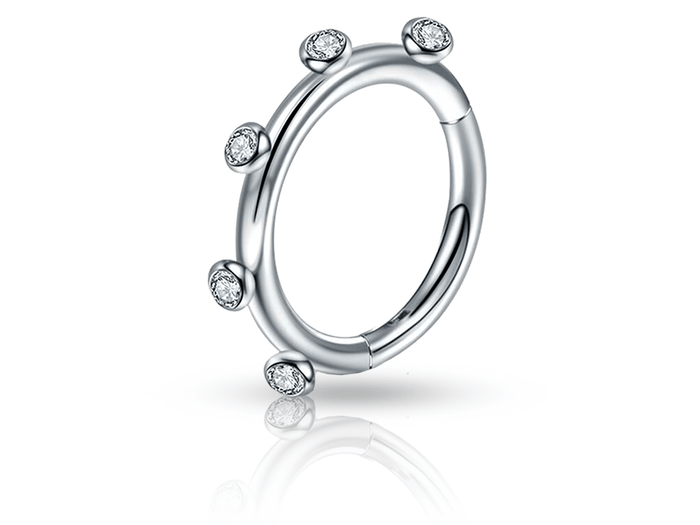
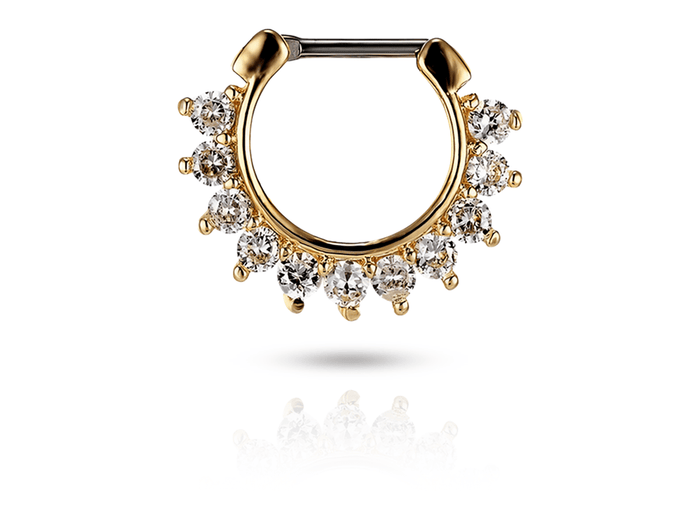
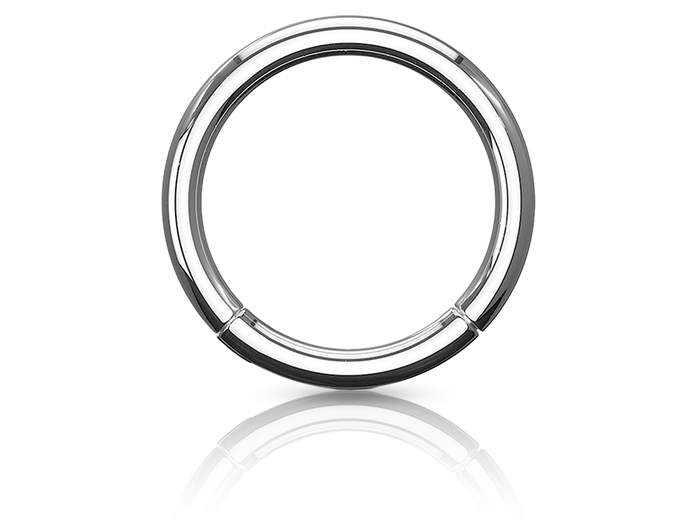
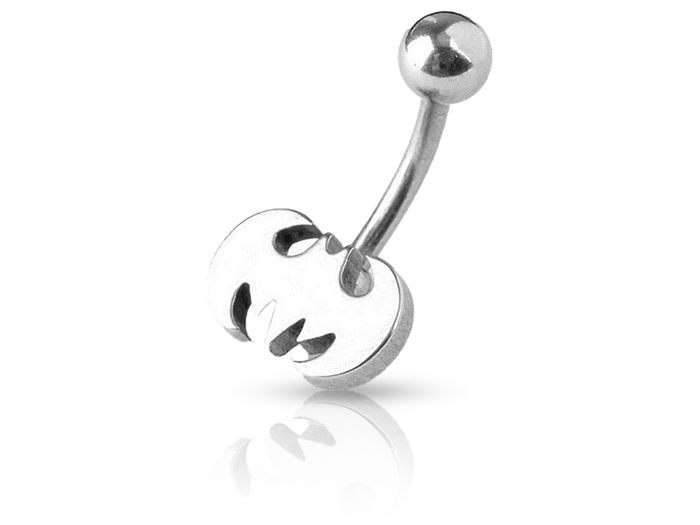
You can use rings for a helix piercing, as well as studs, bars, or anything else you like. You can use beads on your jewelry if you want. You can have as much or as little "bling" as you want.
Helix Piercing as a Ring
Helix Piercing With a Charm
When you choose your jewelry, you need to make sure you really love it. It is going to stay in for weeks or months while your helix piercing heals.
Make sure you are not allergic to the metal you choose. If you have never had a piercing before and do not know how likely an allergic reaction is, stick to safer metals like surgical steel or titanium. Some are better than others for people who get allergic reactions. Titanium is generally well tolerated, as is gold, although that option is more expensive.
Conclusion
Healing a helix piercing can take quite a while, but it is one of the least painful piercings you could get. On top of that, these piercings are now so common that even if you have a tough employer, you should still be able to wear this piercing at work without any negative fallout.
Be patient with the helix piercing healing time, stay consistent with your aftercare, and pick quality jewelry in a metal your body tolerates well. Do that, and you will get to enjoy your new look for a very long time.