

Ear piercings are everywhere, and at every age. It is a simple, routine procedure that carries very little risk. Even so, an ear piercing infection can develop if you are not careful.
Plenty of people never run into any trouble, while others are not so lucky. Infections are a common issue with any piercing, and the ear is no exception.
An infection is no fun, but keep in mind that most of them are only temporary.
Table of Contents
What Is an Ear Piercing Infection?
An ear piercing infection happens when a new piercing takes a turn for the worse. When an infection sets in, a harmful organism moves into the wound and starts causing problems.
Generally, it does not develop any differently from any other type of infection. The infection takes hold when bacteria enter the open wound and kill off the healthy cells throughout the area. That triggers unpleasant, visible symptoms and slows down healing until the infection is cleared up.
What Causes an Ear Piercing Infection?
When you get your ears pierced, the needle creates an opening in the ear so the jewelry can be inserted.
When bacteria get trapped inside the piercing, there is a risk of infection. If you neglect your cleaning routine, it is even more likely to develop.

Once a single bacterium is present, it begins to multiply, and soon there will be a whole team of bacteria causing problems. At that point, you will start to see and feel the signs of the infection.
Ear stretching can also be a cause of infection, because of the small tears that can happen during the stretching process.
While infections can happen to anyone, the cleaner you keep your piercing, the less likely you are to have problems.
That is why it is so important to follow a good aftercare routine that includes applying a suitable saline solution or a specialized product several times a day, until healing is completely finished.
Is My Ear Piercing Infected? Signs and Symptoms of an Infection
You might think it would be easy to spot an infection. After all, you will be constantly checking yourself in the mirror to admire your new piercing. If something were really wrong, you would surely notice it, right?
The thing is, an ear piercing infection is not always that obvious, especially when you are partly in denial.
People never expect to be part of the minority who deal with infections. Unfortunately, the reality is that some people do end up with one, so you need to stay alert.
Before you brush off certain warning signs as part of the normal piercing process, you should understand what you can expect after getting your ears pierced, and what you should not expect to see.
Here are some common infection symptoms you should watch for. Keep in mind, though, that having one or more of these symptoms does not necessarily mean you have an infection. It may just be a side effect of the piercing procedure.
Increased Pain
Ear piercings are not known for being especially painful. If kids can tolerate them, you should be able to as well. That said, it does not mean there is no pain at all. Your earlobes may feel sore or tender for the first couple of days if you are getting them redone.
If you get a helix piercing, meaning a piercing on the upper part of the ear that is mostly cartilage, it is going to hurt a little more.
The real problem is when you notice the pain increasing every day, or getting worse. Although some pain is uncomfortable, it should not be overwhelming.
If that is the case, there may be some kind of underlying condition causing it. If you are feeling a lot of pain, think back to when it started.
- Did you do something that could have increased the pain?
- Do you play contact sports that resulted in your piercing getting bumped?
- Did you sleep on it, which could explain the increased pain?
If you cannot recall an injury that might be causing the pain, you need to keep open the possibility that an infection is developing.
Redness
Redness is one of the vaguest symptoms of a possible infection, because it can come from a lot of things.
Again, think about everything you might have done to cause that redness. Redness is not an automatic warning sign of infection, but it is worth noting so you can try to figure out the cause.

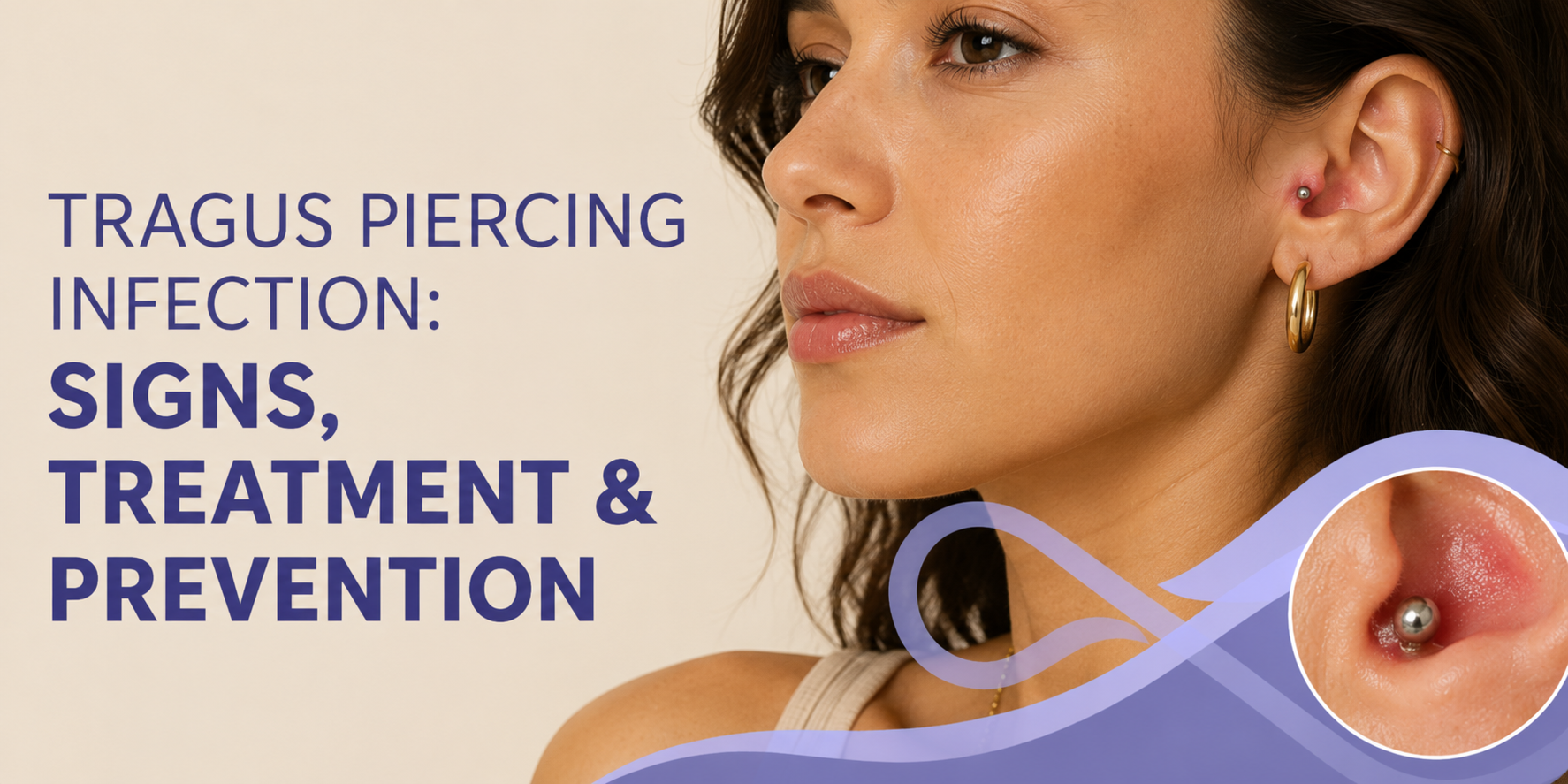
If more than a week has passed since your ear piercing, the redness should be almost nonexistent. So if you are in the second week of your piercing and the redness seems to be getting worse, you should keep a close eye on things.
If you have some of the other symptoms on top of the redness, it is likely an infection.
Swelling
This is another symptom that can be hard to read. Some swelling is expected after an ear piercing. That is normal.
If the swelling increases excessively, you can always try using ice to ease the inflammation. That can help relieve the swelling. Once the swelling has gone down, you may be in a better position to assess the situation.
If the swollen area feels really warm to the touch and is accompanied by a lot of redness, you should be on high alert for an infection.
Appearance of Pus
One of the most important indicators of an infection is a large amount of discharge coming out.
A little pus or discharge is normal after a piercing. However, if it continues beyond a week or seems to come back, you may have an infection.
For that reason, any increase in the amount of pus would be a cause for concern. On top of that, if the amount seems to stay the same but it changes color and is no longer clear or whitish, that can also point to an infection.
The last thing to watch for when it comes to pus is its smell.

Fever
Of all the possible infection symptoms, this is the one you should fear the most. If you have a fever, it means the infection has spread beyond your piercing. A simple local skin infection will not cause a fever.
When you have a fever because of an infection, you need to make an appointment with your doctor. As a safety measure, your doctor will likely prescribe an antibiotic. That should stop the fever within a few days. Even if you start to feel better, make sure you keep taking your medication all the way to the end.
Be wary of any signs of infection that come back within two days of finishing your treatment. It is unlikely, but stay cautious just in case.
How to Treat an Ear Piercing Infection
If there is no fever and the infection seems mild and is not causing you too much pain, you can try treating it at home.
If the infection is coming from a helix piercing on the cartilage, you should see a doctor. When you get an infection there, it can be harder to treat on your own.
- To treat a minor infection, you should wash your hands thoroughly before touching the piercing site. You do not want to introduce any more dirt, germs, or bacteria.
- Next, you will need to prepare a saltwater solution to apply. To do this, take a quarter teaspoon of sea salt and mix it well with a cup of boiling water. Let the water cool so you do not scald yourself. While the water is still warm, you can use your fingers to apply the saltwater to the front and back of the piercing site. More information: How to disinfect a piercing
If you use cotton balls and cotton swabs to apply the liquid, make sure you do not leave behind any cotton fibers that could get trapped in your piercing.
When your piercing has been carefully cleaned and it is time to dry the area, you should not reach for your bath towel.
There are two reasons for this:
- Towels may already contain germs, especially if they are not fresh out of the dryer.
- The second reason to avoid using towels is the same reason you may not want to use cotton swabs and cotton balls: the cotton fibers that can be left behind.
Instead, you should use clean, dry paper towels when you need to dry your ears. Since they are single use, they are less likely to be contaminated when you use them.
You need to make sure you clean the infected area twice a day with the sea salt solution: once in the morning and once in the evening.
Even if you are very busy and it can be hard to find extra time in your packed schedule, you cannot afford to skip cleaning the infected area.
It only takes a few minutes to clean it properly, so take the time to do it.
Another thing you might be tempted to do is take out your piercing. You may think it will help drain the pus from the wound faster, but that is a big mistake.
If you remove the piercing, the hole will close up quickly, possibly before your infection has cleared. If that happens, the infection will be trapped inside.
What Happens After an Ear Piercing Infection?
Having an infection is an eye-opening experience. You will pay more attention to future infections because you know they are a real possibility. It is not something that only happens to other people: you know you are susceptible too.
Knowing that you have had an infection can make you a little paranoid. The good news, though, is that having had one infection does not automatically mean another is on its way.
How to Prevent Ear Piercing Infections
Sometimes infections happen and you never figure out why.
If you know you have been careless about following the basic hygiene instructions your piercer gave you, look no further, you know your mistake. Following a good ear piercing aftercare routine is your best bet for avoiding any future infection.
You should always remember to wash your hands, since it is one of the best ways to prevent further infections.
Another thing you can do to prevent future infections is to make sure that you use a type of metal in your jewelry that will not cause an allergic reaction. While allergic reactions do not cause infections, they can make you more likely to get one.
During an allergic reaction, your skin is in a constant state of irritation.
If your skin is irritated or burning and you need to scratch or rub it, that can cause injury to the skin. That can let bad bacteria in, which can lead to an infection. And if your hands are not clean when you go to scratch the skin irritated by an allergic reaction, you could introduce harmful bacteria.
Conclusion: Ear Piercing Infection
Now that you know a little more about ear piercing infections, you can handle the situation better if you learn that you have one.
With a little time and the right care, you will be healed from your infection before you know it, and things will go back to normal. Your ear may temporarily look and feel a bit swollen, but the good thing is that many infections are usually short-lived and minor.