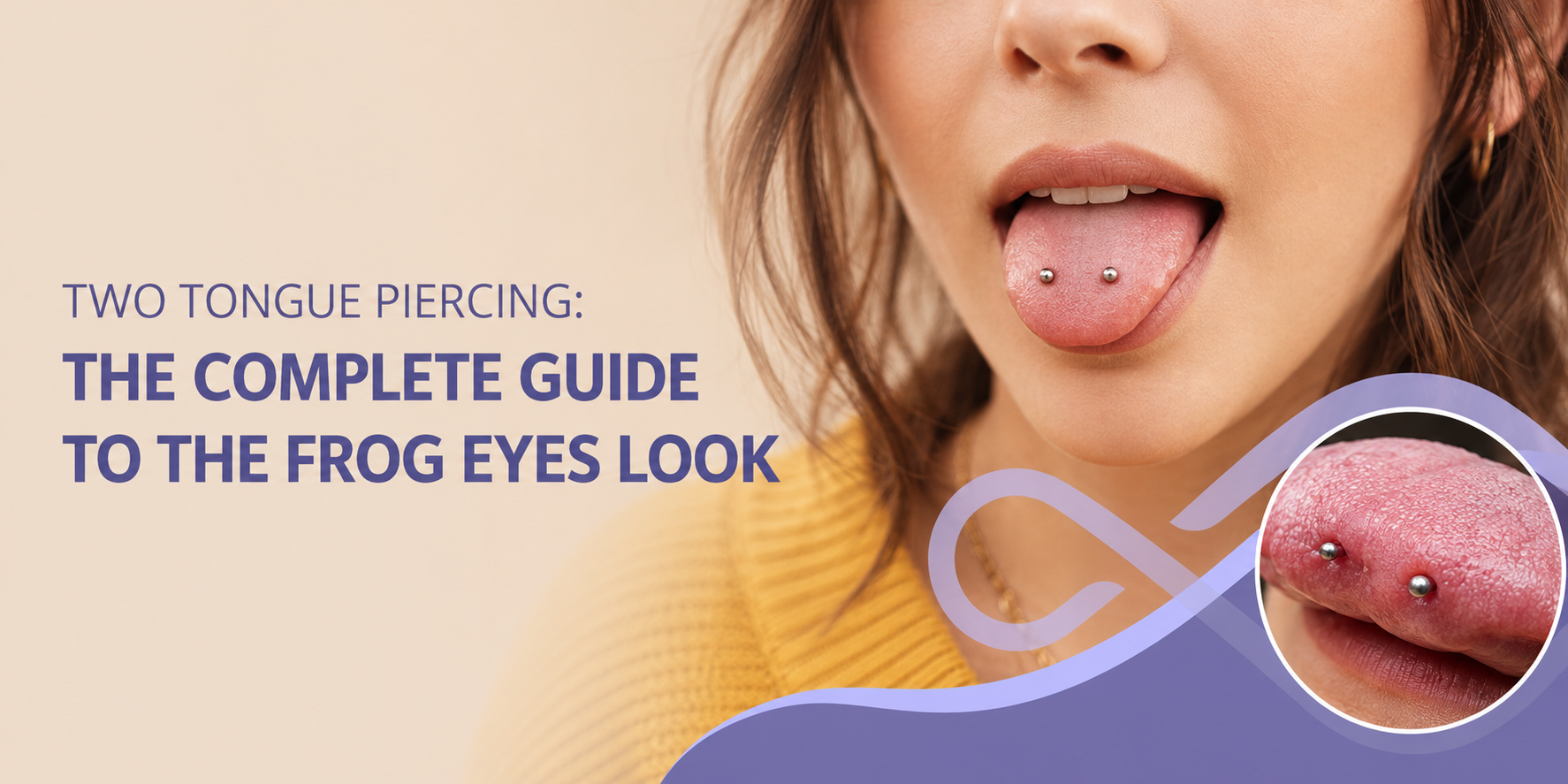



The horizontal tongue piercing — often called the "snake eyes" piercing when it sits right at the tip — gets its nickname from the two beads on the ends of the barbell. Poking out of the tongue tip, they look a lot like a snake's eyes staring back at you. It's far less common than a standard tongue piercing, so if you're chasing a look that turns heads, this could be your way to stand out.
That said, before you commit to any new piercing, it pays to read through a guide like this one first. We've pulled together everything you need to know about the horizontal tongue piercing — and how it compares to the classic snake eyes piercing.
Table of Contents
- What Is a Horizontal Tongue Piercing?
- What Happens During a Horizontal Tongue Piercing?
- Does a Horizontal Tongue Piercing Hurt?
- How Much Does a Horizontal Tongue Piercing Cost?
- Tips Before Getting Your Horizontal Tongue Piercing
- Cleaning and Aftercare Guide
- How Long Does a Horizontal Tongue Piercing Take to Heal?
- Damage to Teeth and Gums
- Jewelry for a Horizontal Tongue Piercing
- Conclusion
What Is a Horizontal Tongue Piercing?
Most tongue piercings people know run vertically through the tongue. They can sit dead center or off to one side, and you can even stack several of them in different spots.
A horizontal piercing creates the illusion that you've got multiple tongue piercings, when in reality the tongue was only pierced once. It passes sideways through the tongue, usually fairly close to the tip — though it can also be placed further back. A curved barbell is used so the beads sit neatly on top of the tongue and so the jewelry is easier to seat.
One thing your piercer will check first: whether your tongue is thick enough to support this placement at all.
What Happens During a Horizontal Tongue Piercing?
- First, you'll be handed an antiseptic mouthwash to rinse with before the piercing. This is standard for every oral piercing — lip piercings included — and it knocks down the bacteria in your mouth to help head off any infection.
- After checking your tongue to confirm you can physically take this piercing, the pro will mark the entry and exit points on each side.
- A clamp then holds your tongue steady, which makes the whole thing easier and safer. A sterile needle goes horizontally through the marked points, and finally the jewelry — a curved barbell — is fitted.
Does a Horizontal Tongue Piercing Hurt?
Generally speaking, the pain from tongue piercings is well tolerated. Plenty of people report it hurt less than they'd braced for. The horizontal version, though, ranks among the more painful tongue piercings out there.

It's widely agreed that a horizontal tongue piercing stings more than a vertical one, simply because the needle and the initial jewelry placement have to travel through more tissue to cross from one side of the tongue to the other.
You'll feel some discomfort during healing too. Tongue piercings bounce back fairly quickly, but the swelling can make eating and talking awkward for about a week.
How Much Does a Horizontal Tongue Piercing Cost?
Even though a horizontal tongue piercing looks more complicated, the procedure is roughly the same — and so is the price. Expect it to cost about the same as a vertical tongue piercing; if you want a benchmark, our guide to tongue piercing price breaks down the typical ranges. (A two tongue piercing, naturally, will run you more.)
In dollar terms, plan on paying somewhere between $50 and $90, jewelry included.
Tips Before Getting Your Horizontal Tongue Piercing

Before you dive in, here are a few tips to get yourself ready:
Keep Up Great Dental and Oral Hygiene
Excellent dental and oral hygiene goes a long way toward preventing infection — especially since the swelling can make brushing trickier for a while.
Know What You Want
Where the piercing sits comes down to your anatomy. Still, you can prep ahead by researching placements and distances so you understand the options on the table. Just stay open to your piercer's advice.
Brace for the Stress and Pain
Don't take painkillers before getting pierced — they can increase bleeding. You can, however, do other things to relax, like listening to music or bringing a friend along for support.
Get Plenty of Sleep
You'd be surprised how much solid sleep boosts your pain tolerance. Rest up beforehand!
Cleaning and Aftercare Guide
Staying on top of how your piercing heals matters. Expect some swelling and tenderness over the first few days. The aftercare is simple, and you'll heal quickly if you follow these steps.
Rinse After Meals
You can't use an alcohol-based mouthwash after a tongue piercing because it's irritating. Pick up an alcohol-free antiseptic rinse instead — the kind made for dental procedures works well. Use it after eating to clean your mouth while proper brushing is still difficult.
Keep Brushing Your Teeth
You won't be able to brush as thoroughly as usual, but still clean the teeth you can reach easily. Just be careful not to irritate the piercing or brush the tongue. You can return to full brushing once the swelling subsides.
Use a Saline Solution Twice a Day
Saline is simply salt water. You can usually buy a saline rinse from your piercer, or mix about a cup of warm distilled water with a quarter teaspoon of salt. Rinsing twice daily speeds healing and lowers your infection risk.
Stick to Easy-to-Eat Foods
Eating will be a bit of a struggle for a few days, so go for foods that don't need much chewing and skip anything irritating — hot drinks, alcohol, spicy dishes. You can get back to all of it once you're healed.

Avoid Potential Sources of Irritation or Infection
There are a few things to steer clear of while you're healing:
- Don't play with the jewelry
- Avoid oral sex
- Don't smoke
Wash Your Hands
Every time you clean your piercing, wash your hands first. You want to keep bacteria out of your mouth.

How Long Does a Horizontal Tongue Piercing Take to Heal?
Healing time is roughly the same as a basic tongue piercing — about two months, with the inflammation easing off within 10 days or so. Following proper aftercare speeds things up considerably.
What slows healing down?
❌ Playing with your piercing and generally neglecting self-care.
✅ So make sure you sleep enough, eat well, and clean your piercing as often as you can.
Possible Infections
An infection is no fun and can leave permanent scarring. Here's how to spot one:
- Bleeding after the first couple of days
- Redness and swelling lasting more than 10 days
- Yellow or green pus coming from the piercing
- Red streaks or major discoloration of the tongue (this can be serious and may need emergency care)
- Fever

Clear discharge, soreness, swelling and a little bleeding are all part of normal healing. For minor infections, ask your piercer for advice. For more serious ones, you'll need antibiotics from a doctor. Contrary to popular belief, taking the jewelry out can actually trap the infection and let bacteria multiply. Infection is a risk, but good hygiene usually prevents it.
Damage to Teeth and Gums
Because of where this piercing sits, the beads on the jewelry can chip teeth or irritate the gums. Check your teeth regularly and keep up with dentist visits to make sure you're not causing damage. And don't play with or bite down on your piercing.
Rejection
Sometimes the tongue rejects a piercing, with healing tissue pushing the jewelry to a different spot. When that happens, your piercing may look lopsided or start damaging your teeth.
Scarring
Everyone's different, and some people just don't tolerate tongue piercings. If the piercing gets irritated or your body rejects it, you could be left with permanent scarring on your tongue.
Speech Issues
Lots of people with horizontal tongue piercings find it hard to speak clearly, even after they're fully healed. This piercing limits the tongue's movement because of how much muscle it crosses.
Swallowing the Jewelry
Every oral piercing carries this risk. To avoid it, wash your hands and tighten the jewelry once a day. Bedtime is a good moment, so you don't lose a bead while you sleep.
Saliva
Yes — while your piercing heals, you'll probably produce more saliva than usual. This is usually temporary.
Jewelry for a Horizontal Tongue Piercing
You can use either a straight or a curved barbell, depending on how the piercing was placed. Beyond that, no other jewelry really works for a horizontal tongue piercing, since you need a bar to span the full length of the channel.
While it heals, stick to titanium, gold or surgical steel only. Metal bars with acrylic beads can be a smart pick to help prevent tooth damage.
Be aware that cheap jewelry can trigger allergic reactions that lead to infection — some materials make it far easier for bacteria to take hold.
Conclusion
Everyone wants a piercing that feels a little bit theirs, which is why new variations and jewelry keep appearing. The horizontal tongue piercing is easily one of the least common, so if you're ready for something genuinely original, you're going to love it.
It'll hurt a touch more than other piercings, and you'll probably notice the initial soreness lingers longer, since the needle and jewelry cross a wider stretch of tissue. But healing should be on par with a standard tongue piercing — a horizontal tongue piercing closes up in roughly two months.
Stick to proper aftercare — avoid irritating foods and rinse daily with mouthwash and a saline solution — and you've got a great shot at dodging complications and enjoying a fresh, one-of-a-kind piercing.